|
|
|
|
|
|
|
 |
|
|
Theme: A Voice
Insights:
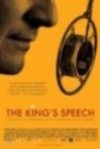
The King's Speech won the Academy Award for Best Motion Picture of 2010. Of course it had exceptional acting, writing, and directing, but most of all it had a story that captured the hearts of millions of people. No, it was not the perennial infatuation with British Royalty (although there was some of that), it was more than that. It was about a voice. At some deep level every human being can identify with the loss of voice and the desire to find one's own.
The Speeches:
The film is book ended by two speeches. It opens with the very public speech of the Duke of York at Wembley Station for the closing of the Empire Exhibition. All eyes, and there are thousands, are on the Duke as he humiliates himself by his inability to speak. He has a stutter, a stammer, and it is painful to watch. The film concludes with another speech. By this time the Duke of York has become King George VI and once again he is addressing the subjects of the British Empire. However, this time the speech is private, made before the audience of one. There is no stuttering, or stammering, only the voice of a King speaking to his people in their hour of need. The plot of the film is the transformation of the Duke with a stammer to a King with a voice.
The Voice:
There is a depth of meaning in the title "The King's Speech". Yes it does refer to the two speeches the King makes, but it is also about his faculty, or power of utterance...his speech. Similarly with his voice; it isn't just about his voice (being able to speak). It is about his voice; his expressed wish, choice, opinion, his right to express them, to have "a voice in the matter". The King's speech (his utterance) has been affected by his not having a voice. The story is about the recovery of his voice which brings about the recovery of his ability to speak.
A Contrast:
The transformation and healing of "Bertie" comes about through the new life he receives from a friend. There is a contrast between his old life under his father King George V and the new life he receives with the help of his friend Lionel.
|
George V |
Lionel |
|
A harsh taskmaster |
A friend |
|
A King |
A "nobody" no title/qualifications |
|
In a palace |
In a basement |
|
Angry |
Joyful |
|
Hopeless |
Hopeful |
|
Fear based world |
Love based world |
|
Children wounded/abused |
Children loved/delighted in |
|
Wants only external performance |
Wants internal healing |
|
Does not allow desire |
Frees to follow desire |
|
Shapes by punishment (makes right-handed) |
Shapes by love and teaching |
|
Treats others as nobodies |
Treats everybody as a somebody |
|
Orders what to do |
Frees to make choices |
|
Does not give them a voice |
Gives them their own voice |
Throughout the film there is a subtle contrast between two fathers. Lionel's relationship with his sons is not insignificant. It is in contrast to George V's relationship with his sons.
The life Bertie received from his father isolated him. It made him fearful, angry, hopeless, arrogant, humiliated, and speechless.
The life Bertie received from his friend released him. It made him loved, joyful, hopeful, respectful, humble, and gave him his voice.
The movie is so loved because everyone wants and needs a friend like Lionel.
|
|
|
|  |
|
|
|
|
|
|
|
|
| |